
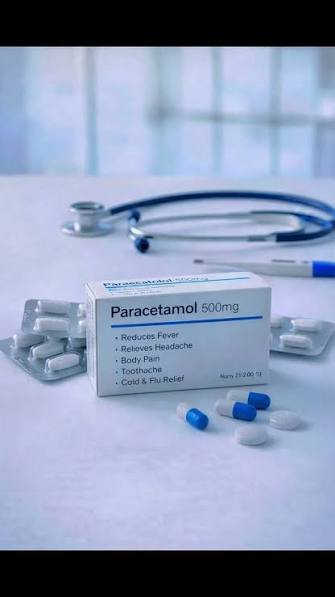
Paracetamol 650mg Uses, Side Effects, Dosage, Safety and Price in the USA: Complete 2026 Guide
What Is Paracetamol 650mg?
Paracetamol is a widely used pain reliever and fever reducer. In the United States, the same active ingredient is generally called acetaminophen, while the name paracetamol is more common in many other countries. A 650mg tablet or caplet contains 650 milligrams of this active ingredient, although the formulation can vary considerably between immediate-release and extended-release products. Acetaminophen is commonly used for temporary relief of mild to moderate pain, including headaches, muscle aches, backaches, toothache, menstrual discomfort, and some types of joint pain, as well as for reducing fever. MedlinePlus describes acetaminophen as both an analgesic and an antipyretic, meaning it helps relieve pain and lower elevated body temperature.
One important point for American consumers is that searching for “paracetamol 650mg” may produce fewer results than searching for “acetaminophen 650mg.” The medicine is the same active ingredient, but products sold in the USA use the acetaminophen name. The 650mg strength is particularly common in extended-release or 8-hour formulations, including products marketed for arthritis and longer-lasting pain relief. Consumers should therefore read the Drug Facts label carefully rather than relying only on the product name. A medicine cabinet can contain several products with acetaminophen without looking similar, and that is one reason accidental excessive intake can happen.
Paracetamol vs. Acetaminophen in the USA
There is no meaningful difference in the active medicine simply because the name changes from paracetamol to acetaminophen. Paracetamol and acetaminophen refer to the same drug, although regional terminology differs. In the USA, shoppers will normally find acetaminophen on the label of products sold for pain and fever, including generic medicines and well-known brands.
This distinction matters when searching online because someone familiar with paracetamol may assume that the American market does not carry the medicine. It does; it is simply marketed under another name. The FDA specifically refers to acetaminophen when discussing its safe use, labeling, dosing, and risks in the United States.
How Paracetamol 650mg Works
Acetaminophen works primarily by changing how the body senses pain and by helping reduce fever. It is different from medicines such as ibuprofen because it is not primarily used as an anti-inflammatory drug. That means a person seeking relief from pain does not necessarily get the same anti-inflammatory effect that they might expect from an NSAID.
The practical takeaway is simple: 650mg acetaminophen can be useful when the goal is temporary relief of pain or fever, but it should not automatically be considered the best medicine for every painful condition. The reason for the pain, the person’s age, weight, other medicines, liver health, and the exact formulation all matter.
Common Uses of Paracetamol 650mg
The most common reason people take acetaminophen 650mg is to temporarily reduce mild to moderate pain or fever. Common examples include headaches, minor muscle aches, backache, toothache, menstrual cramps, discomfort associated with a cold, and certain joint pains. Some 650mg extended-release products are specifically labeled for longer-lasting relief of arthritis-related pain. Current retail product information for 650mg extended-release acetaminophen also lists temporary relief of minor aches and pains and fever reduction.
It is important to understand the word temporary. Acetaminophen can make symptoms easier to manage, but it does not necessarily treat the underlying cause. If a tooth hurts because of an infection, for example, taking a pain reliever may reduce the discomfort without treating the dental problem itself. Likewise, persistent back pain may need an evaluation rather than repeated self-treatment. A useful rule is to think of the medicine as turning down the volume on a symptom, not necessarily repairing the source of the problem.
Pain Relief
Acetaminophen is commonly used for everyday aches and pains. People may choose it for headaches, muscular discomfort, backache, minor injuries, toothache, menstrual cramps, and other short-term painful conditions. The advantage for many consumers is that it is widely available without a prescription and comes in numerous formulations.
However, stronger does not always mean better. A 650mg tablet should not be taken simply because a person believes that a higher number will always provide faster or superior relief. The correct dose depends on the particular product and its label instructions, and extended-release formulations have different dosing schedules from immediate-release products.
Fever Reduction
Acetaminophen is also used to temporarily reduce fever. Fever is a symptom rather than a disease, so the reason behind the fever remains important. A person with a minor viral illness may use acetaminophen for comfort, but a high, persistent, or unexplained fever can require medical assessment.
Parents and caregivers should be especially careful with children because pediatric dosing is not simply a matter of giving an adult 650mg tablet. Children’s dosing may depend on age, weight, and formulation. Never assume that an adult-strength 650mg product is appropriate for a child.
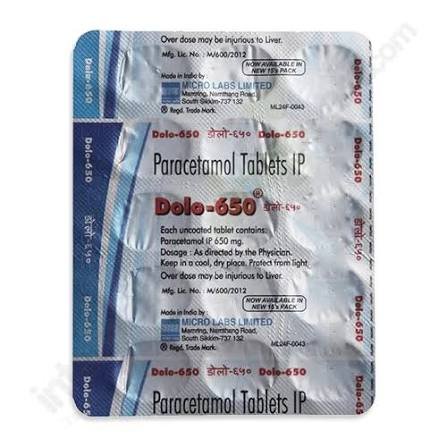
Paracetamol 650mg for Headaches and Body Aches
Headaches and general body aches are among the situations in which acetaminophen is commonly used. A person dealing with a tension-type headache, muscle soreness, or discomfort associated with a cold may find temporary relief after taking an appropriate dose. MedlinePlus lists mild to moderate pain and fever among the principal reasons acetaminophen is used.
The key word is appropriate. Headaches that repeatedly return, become unusually severe, follow a head injury, or occur with other concerning symptoms should not simply be treated indefinitely with pain medicine. The same principle applies to body aches that persist or worsen. A medicine can be useful as part of symptom management while still leaving an underlying condition that needs attention.
For ordinary short-term discomfort, consumers should follow the label and avoid combining multiple acetaminophen-containing medicines. Cold, flu, cough, and nighttime products can contain acetaminophen even when “pain relief” is not the main name on the package. Checking the active ingredients is therefore one of the simplest safety habits a consumer can develop.
Paracetamol 650mg for Toothache and Menstrual Pain
Acetaminophen can temporarily reduce discomfort from toothache and menstrual cramps. These are common reasons people look for over-the-counter pain relief, and acetaminophen may be useful when used according to the product directions. Some 650mg extended-release product descriptions specifically mention menstrual and premenstrual cramps among the minor aches and pains they may temporarily relieve.
Toothache deserves special attention because pain can indicate decay, inflammation, infection, or another dental problem. If the pain continues, becomes severe, or is accompanied by swelling, fever, difficulty swallowing, or other concerning symptoms, pain medicine should not become a substitute for dental care. Similarly, menstrual pain that is unusually severe, suddenly different, or interfering substantially with daily activities may warrant discussion with a healthcare professional.
Using acetaminophen for temporary comfort is therefore reasonable for many people, but the medicine should be viewed as symptom relief rather than a cure. That distinction helps prevent repeated self-treatment when professional evaluation is actually needed.
Paracetamol 650mg for Arthritis and Joint Pain
One of the most visible uses for 650mg extended-release acetaminophen in the American retail market is arthritis and joint pain. Extended-release formulations are designed to release medicine over a longer period, and products may be marketed as providing up to eight hours of relief. Current Walmart listings, for example, include 650mg extended-release acetaminophen products labeled for arthritis pain and longer-lasting relief.
Acetaminophen may help reduce the pain associated with arthritis, but it does not directly address joint inflammation in the way anti-inflammatory medicines do. People with chronic arthritis should therefore discuss their overall pain-management strategy with a healthcare professional, particularly if pain is persistent or worsening.
Another issue is long-term use. A person who needs pain medicine every day should not simply increase the amount independently. Even a familiar over-the-counter medicine can become dangerous when taken above recommended limits or combined with other products containing the same ingredient.
Typical Adult Dosage and Timing
There is no single dosage schedule that applies to every 650mg product. Always check the Drug Facts label for the exact product you have purchased. Some 650mg formulations are extended-release products intended to provide longer-lasting relief, while other medical formulations use different schedules. FDA documentation for certain acetaminophen products has included adult dosing of 650mg every four hours under specific clinical circumstances, but that should not be interpreted as a universal instruction for every over-the-counter 650mg product.
For adults and children 12 years and older, the FDA states that the maximum total amount of acetaminophen from all medicines combined should not exceed 4,000mg in 24 hours. This is a total, not a separate limit for every product. If a person takes a cold medicine containing acetaminophen and then takes a pain reliever containing acetaminophen, both amounts count toward the same daily total.
People with liver disease, people who regularly drink alcohol, and people taking certain other medicines may need a different limit or additional medical advice. The safest approach is not to calculate a personal maximum based only on general online information.
Extended-Release 650mg Products
Many 650mg products sold in the USA are extended-release acetaminophen formulations. These are often marketed for arthritis or other aches and may be labeled as providing relief for several hours. One current retail listing describes a 650mg extended-release product as providing up to eight hours of relief.
Extended-release tablets or caplets should be used according to their specific directions. Consumers should not assume that an extended-release 650mg product can be substituted dose-for-dose with a 500mg immediate-release product. The release mechanism affects how the medicine is delivered over time, so the instructions on the particular package matter.
When taking an extended-release medicine, avoid altering the tablet unless the product labeling specifically says it can be done. Crushing or otherwise changing a formulation designed to release medicine gradually can affect how the dose is delivered. If you are unsure whether a particular tablet can be split, crushed, or chewed, ask a pharmacist.
Maximum Daily Dose and Overdose Risks
The FDA currently states that adults and children 12 years and older should not take more than 4,000mg of acetaminophen in 24 hours from all sources. That figure is important because acetaminophen overdose can cause serious liver damage. The FDA warns that taking too much can lead to severe liver injury, and excessive exposure can sometimes require a liver transplant or result in death.
Imagine having three different medicines in your bathroom cabinet. One is for a headache, another is for a cold, and another is a nighttime product. If each contains acetaminophen, the labels may look completely different even though the active ingredient is being added together in your body. This is why consumers should always look under “Active Ingredient” or “Drug Facts” rather than relying on brand names.
If you think you have taken too much acetaminophen, do not wait for symptoms to appear. The FDA advises seeking medical help or contacting Poison Help immediately after a suspected overdose.
Common Side Effects
Acetaminophen is generally well tolerated when used correctly, and many people experience no noticeable side effects. Still, no medicine is completely risk-free. Some people may experience nausea, stomach discomfort, headache, or other unwanted effects, although these are not necessarily caused by the medicine in every individual.
The most important safety issue is not a minor everyday side effect but excessive exposure and liver injury. Acetaminophen can be safe at recommended doses but potentially dangerous when too much is taken. The difference between appropriate use and overdose is therefore significant.
If you develop a concerning reaction after taking a product, stop and seek appropriate medical advice. Serious or unexpected symptoms should never be dismissed simply because acetaminophen is available without a prescription.
Serious Side Effects and Warning Signs
Serious reactions to acetaminophen are uncommon when the medicine is used correctly, but they can occur. Liver injury is the major concern associated with excessive dosing. Warning signs can include unusual nausea or vomiting, abdominal pain, unusual tiredness, confusion, yellowing of the skin or eyes, or other symptoms of significant illness. Symptoms alone cannot reliably determine how much liver damage has occurred, so suspected overdose requires prompt professional assessment.
Severe allergic reactions are also possible, although uncommon. Difficulty breathing, swelling of the face or throat, widespread rash, or other signs of a serious allergic reaction require urgent medical attention.
The most important point is that a person should not wait until feeling seriously ill before seeking help after a suspected overdose. The FDA specifically advises getting medical help immediately if too much acetaminophen has been taken.
Who Should Use Extra Caution?
Certain people should discuss acetaminophen use with a healthcare professional before taking it regularly. This includes individuals with liver disease, those who drink alcohol heavily or regularly, and people who take multiple prescription or over-the-counter medicines.
People who use several medications should be particularly careful because acetaminophen appears in many combination products. Someone may unknowingly take acetaminophen from a painkiller, cold medicine, prescription combination medicine, or nighttime product at the same time.
Older adults and people with complex medical conditions may also need individualized advice. The right medicine is not determined by age alone, but age, body weight, kidney and liver function, other medicines, and general health can all affect safe medication use.
Pregnant people, breastfeeding mothers, and caregivers giving medicine to children should also check with a healthcare professional when they are uncertain about the appropriate product or dose.
Drug Interactions and Combination Medicines
One of the most common practical problems with acetaminophen is duplicate dosing. A consumer may take one medicine for pain and another for cold symptoms without realizing that both contain acetaminophen. The FDA specifically advises consumers to check labels and avoid taking more than the recommended amount.
The best habit is to identify the active ingredient before taking a new product. Look for the words acetaminophen, APAP, or, outside the USA, paracetamol. Prescription medicines can also contain acetaminophen, so a pharmacist can help determine whether two medicines overlap.
Do not assume that a product is safe to combine simply because it is sold without a prescription. Over-the-counter does not mean unlimited. The important question is always how much of the active ingredient is being taken in total.
Paracetamol 650mg During Pregnancy and Breastfeeding
People who are pregnant or breastfeeding often ask whether acetaminophen is appropriate. The answer can depend on the individual’s health, the reason for taking it, the dose, and how frequently it is being used. Because pregnancy and breastfeeding decisions are personal medical questions, anyone who is uncertain should discuss the medicine with an obstetrician, physician, pharmacist, or another qualified healthcare professional.
Avoid treating online dosage charts as a substitute for individualized medical advice. If pain or fever persists during pregnancy, the underlying condition may need assessment rather than repeated self-treatment.
For breastfeeding mothers, the same principle applies: check the exact product, dose, and other medicines being taken. A healthcare professional can help determine whether a particular formulation is suitable for the individual’s circumstances.
Paracetamol 650mg Price in the USA
The price of acetaminophen 650mg in the USA varies substantially depending on brand, tablet count, retailer, formulation, and promotions. Generic products are usually less expensive than brand-name alternatives. Current Walmart listings provide useful examples: one Equate 650mg extended-release 100-count product is listed at about $6.30, while another Equate 650mg extended-release 225-count product is listed around $9.96.
Brand-name products can cost more. A current Walmart listing shows Tylenol 8 Hour Arthritis 650mg extended-release, 225 count, at $22.97, although prices can change by retailer, location, promotion, and availability. A smaller 24-count package has also appeared at a substantially lower promotional price, demonstrating why consumers should compare the price per tablet rather than looking only at the package price.
| Product type | Example current retail price | Approximate quantity |
|---|---|---|
| Generic Equate 650mg extended-release | $6.30 | 100 caplets |
| Generic Equate 650mg extended-release | $9.96 | 225 caplets |
| Tylenol 8 Hour Arthritis 650mg | $22.97 | 225 caplets |
| Tylenol 8 Hour Arthritis smaller package | $4.97 promotional listing | 24 caplets |
These figures are examples rather than fixed national prices. Retail prices change frequently, and online prices may differ from prices in physical stores.
Brand-Name vs. Generic Acetaminophen
For many consumers, the biggest price difference is between brand-name and generic acetaminophen. Generic products contain the same active ingredient specified on the label, although inactive ingredients, tablet appearance, packaging, and manufacturing companies can differ. A generic 650mg extended-release product may therefore offer a lower-cost alternative to a branded 650mg product.
For example, current retail listings show Equate 650mg extended-release acetaminophen products priced considerably below some Tylenol 650mg extended-release packages.
Price is not the only factor. Consumers should compare the active ingredient, strength, release type, tablet count, and directions. A cheap 500mg immediate-release product is not automatically equivalent to a 650mg extended-release product simply because both are acetaminophen. Comparing like with like produces a much more meaningful price comparison.
How to Buy and Use It Safely
Buying acetaminophen safely begins with reading the label before putting the package in your shopping cart. Check whether the medicine contains 650mg acetaminophen, whether it is extended-release, how often the manufacturer says to take it, and what warnings apply. Then check other medicines you already use so you do not accidentally duplicate the active ingredient.
Keep medicines in their original labeled containers whenever possible. This makes it easier to identify the strength and ingredients later. If several people in a household use different medicines, clearly identifying each product can also reduce confusion.
A pharmacist can be particularly useful when you are comparing products. Instead of asking only, “Which one is strongest?” ask, “Which product contains acetaminophen, what is the strength, and does it overlap with anything I already take?” That question focuses on safety rather than simply potency.
When to Speak With a Doctor or Pharmacist
You should consider professional advice when pain is persistent, severe, unexplained, or repeatedly requires medication. You should also ask before regular use if you have liver problems, drink alcohol regularly, take several medicines, or are unsure whether another medicine contains acetaminophen.
Professional advice is especially important after a suspected overdose. Do not try to solve a possible overdose by simply skipping the next dose or waiting for symptoms. The FDA advises immediate medical help when too much acetaminophen may have been taken.
For everyday use, a pharmacist can often answer practical questions about product differences, active ingredients, timing, and interactions. When the symptoms themselves are concerning, a physician or other healthcare professional may need to determine the underlying cause.
Conclusion
Paracetamol 650mg, known as acetaminophen 650mg in the United States, is a commonly used medicine for temporary relief of pain and reduction of fever. It may be useful for headaches, muscle aches, backache, toothache, menstrual cramps, arthritis-related discomfort, and other mild to moderate aches, depending on the specific product labeling. Extended-release 650mg formulations are particularly common in products marketed for longer-lasting arthritis and joint-pain relief. Current American retail listings show that generic versions can be substantially cheaper than brand-name alternatives, with prices varying according to package size and retailer.
The most important safety message is that more acetaminophen is not necessarily better. The FDA states that adults and children 12 years and older should not exceed 4,000mg of acetaminophen in 24 hours from all medicines combined. Because acetaminophen can appear in many pain, cold, flu, and prescription products, consumers need to check active ingredients carefully. Excessive amounts can cause serious liver injury, which is why suspected overdose should be treated as a medical emergency rather than something to watch at home.
Article Outline
- H1: Paracetamol 650mg Uses, Side Effects, Dosage, Safety and Price in the USA
- H2: What Is Paracetamol 650mg?
- H3: Paracetamol vs. Acetaminophen in the USA
- H3: How Paracetamol 650mg Works
- H2: Common Uses of Paracetamol 650mg
- H3: Pain Relief
- H3: Fever Reduction
- H2: Paracetamol 650mg for Headaches and Body Aches
- H2: Paracetamol 650mg for Toothache and Menstrual Pain
- H2: Paracetamol 650mg for Arthritis and Joint Pain
- H2: Typical Adult Dosage and Timing
- H2: Extended-Release 650mg Products
- H2: Maximum Daily Dose and Overdose Risks
- H2: Common Side Effects
- H2: Serious Side Effects and Warning Signs
- H2: Who Should Use Extra Caution?
- H2: Drug Interactions and Combination Medicines
- H2: Paracetamol 650mg During Pregnancy and Breastfeeding
- H2: Paracetamol 650mg Price in the USA
- H2: Brand-Name vs. Generic Acetaminophen
- H2: How to Buy and Use It Safely
- H2: When to Speak With a Doctor or Pharmacist
- H2: Conclusion and FAQs
- H2: What Is Paracetamol 650mg?
FAQs
1. Is paracetamol 650mg the same as acetaminophen 650mg in the USA?
Yes. Paracetamol and acetaminophen are different names used for the same active drug. In the United States, products are generally labeled acetaminophen, while “paracetamol” is more commonly used in many other countries. Therefore, someone searching for paracetamol 650mg in the USA should generally search for acetaminophen 650mg.
2. What is paracetamol 650mg used for?
It is used for temporary relief of mild to moderate pain and for reducing fever. Depending on the formulation and label, uses can include headaches, muscle aches, backache, toothache, menstrual cramps, arthritis-related pain, and other minor aches.
3. How much acetaminophen can an adult take in one day?
The FDA states that adults and children 12 years and older should not take more than 4,000mg of acetaminophen in 24 hours from all medicines combined. The exact dosing schedule for a 650mg product depends on whether it is immediate-release or extended-release and on the instructions printed on the specific product. People with liver disease or other risk factors may require individualized advice.
4. How much does paracetamol 650mg cost in the USA?
Prices vary by brand, package size, retailer, and location. Recent Walmart listings showed generic 650mg extended-release acetaminophen examples around $6.30 for 100 caplets and $9.96 for 225 caplets, while a 225-count Tylenol 8 Hour Arthritis 650mg package was listed at about $22.97. These prices can change, so shoppers should check current prices before purchasing.
5. What happens if someone takes too much paracetamol 650mg?
Taking too much acetaminophen can cause serious liver damage, and severe overdose can be life-threatening. A person may not immediately feel seriously ill, so waiting for symptoms is unsafe. If you think you or someone else has taken too much acetaminophen, seek medical help immediately; the FDA specifically recommends prompt medical assistance after suspected overdose.